
Hey friends! If you’re a proud German Shepherd parent like me, you know how important it is to feed your dog the right food. I’m here to share the most accurate, trustworthy info about dog food recipes that suit these strong, smart companions perfectly. Over the years, I’ve researched and tested what works best, so you’re in good hands.
So, what are the best dog food recipes for German Shepherds? German Shepherds need balanced meals rich in protein, healthy fats, and essential nutrients to support their active lifestyle and large frame. Home-cooked recipes with lean meats, wholesome grains, and dog-friendly veggies offer ideal nutrition tailored to their unique needs.
Stick around, and I’ll walk you through several nutritious, easy-to-make recipes designed specifically for German Shepherds. You’ll also get tips on ingredients, portion sizes, and how to keep your dog healthy and happy with homemade meals.
Why Homemade Dog Food for German Shepherds?
Making your own dog food for your German Shepherd is a great way to ensure they get fresh, wholesome ingredients without fillers or harmful additives. I love how homemade meals allow you to customize recipes according to your dog’s age, activity level, and health conditions.
German Shepherds are prone to digestive issues and allergies, so cooking at home gives you control over what goes into their bowl. Plus, it’s satisfying to know exactly what your dog is eating. You can include nutrient-rich proteins like chicken, beef, or fish, and add veggies that support joint health and digestion.
Making meals at home doesn’t need to be complicated. I’ll help you pick the right ingredients and balance them for optimal energy and wellness. Ready to explore some tasty recipes your German Shepherd will love? Let’s dive in!
Nutritional Needs of German Shepherds
Before we jump into recipes, let’s quickly cover the basics of what a German Shepherd needs nutritionally:
- Protein: Crucial for muscle development and repair. Aim for 22-32% protein in their diet, mostly from animal sources.
- Fats: Provide energy and support skin and coat health. Healthy fats should make up about 10-15%.
- Carbohydrates: Supply energy and fiber. Opt for whole grains or vegetables.
- Vitamins & Minerals: Vital for immune function, bone health, and metabolism.
- Joint Support: Ingredients rich in glucosamine and chondroitin can help prevent hip and joint problems common in German Shepherds.
Keeping these in mind ensures any recipe you try meets their needs and keeps them thriving.
High-Protein Chicken and Sweet Potato Delight
This recipe works because chicken is a lean, high-quality protein that supports muscle strength, essential for active German Shepherds. Sweet potatoes provide complex carbs and fiber, aiding digestion and energy release.
Ingredients:
- 2 pounds boneless, skinless chicken breast
- 1 large sweet potato, peeled and diced
- 1 cup green beans, chopped
- 1/2 cup carrots, shredded
- 1 tablespoon olive oil
- 1/2 teaspoon turmeric powder (anti-inflammatory benefits)
Health Benefits:
Chicken builds muscle; sweet potatoes and veggies add antioxidants and fiber. Olive oil supports a shiny coat and joint health. Turmeric helps reduce inflammation, great for aging German Shepherds.
Practical Tip:
Cook chicken thoroughly and boil sweet potatoes until tender. Mix ingredients and cool before serving. Store leftovers in the fridge for up to 3 days.
This recipe is perfect for German Shepherds of all ages, especially those needing lean protein and joint support. Next, let’s look at a fish-based meal that’s rich in Omega-3s.
Omega-3 Rich Salmon and Quinoa Bowl
This meal boosts brain health and reduces inflammation thanks to salmon’s Omega-3 fatty acids. Quinoa is a gluten-free grain that provides essential amino acids and fiber.
Ingredients:
- 1.5 pounds wild-caught salmon fillets, cooked and flaked
- 1 cup cooked quinoa
- 1/2 cup steamed broccoli florets
- 1/4 cup pumpkin puree
- 1 tablespoon flaxseed oil
Health Benefits:
Omega-3s from salmon promote cognitive function and heart health. Quinoa offers protein and fiber to aid digestion. Pumpkin helps regulate bowel movements and supports urinary tract health.
Practical Tip:
Remove all bones from salmon before serving. Flaxseed oil can be added fresh just before serving for maximum nutrient retention.
This recipe suits German Shepherds with sensitive digestion or skin issues and fits well in both traditional and modern feeding routines.
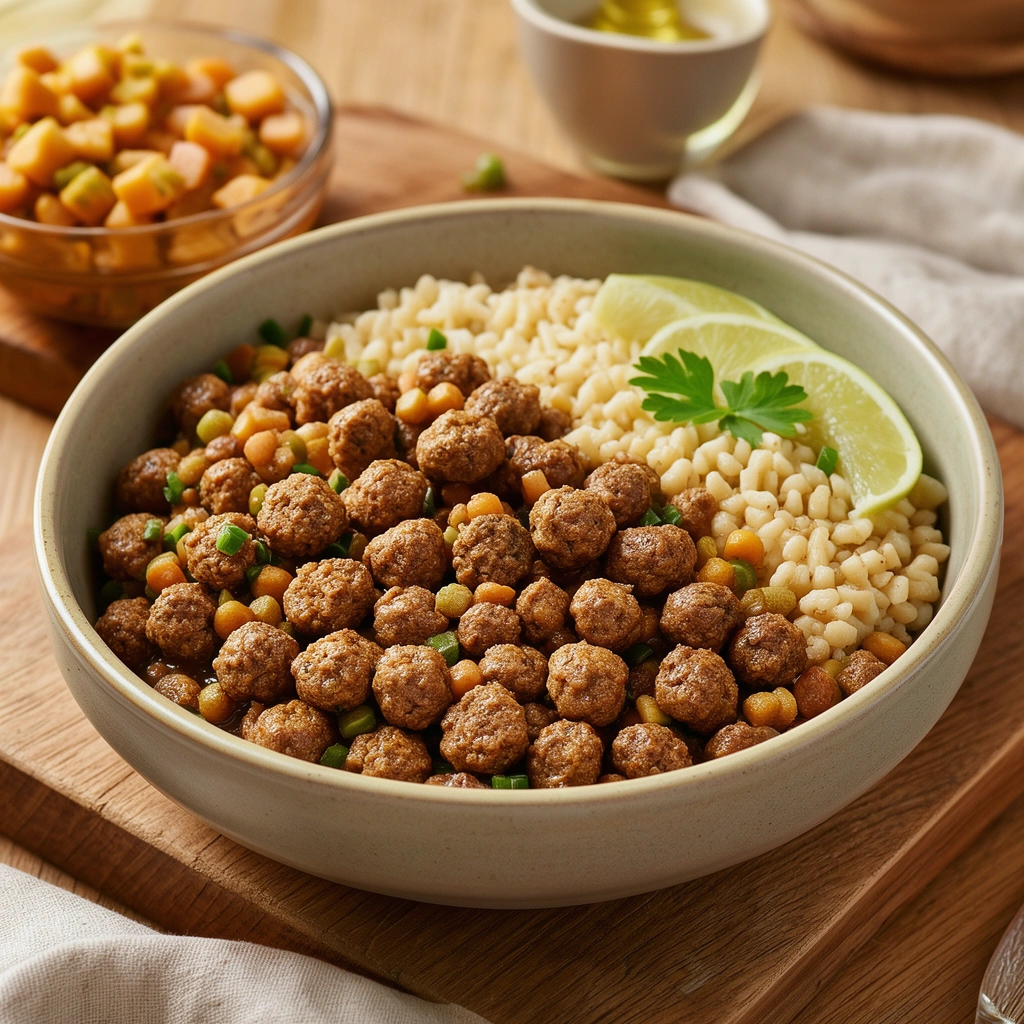
Beef and Vegetable Stew For Muscle Power
A hearty stew that combines rich beef protein with nutrient-packed vegetables. This recipe helps maintain muscle mass and provides antioxidants for immune support.
Ingredients:
- 2 pounds lean ground beef
- 1 cup chopped carrots
- 1 cup chopped spinach
- 1/2 cup peas
- 1 cup brown rice, cooked
- 1 tablespoon coconut oil
Health Benefits:
Beef is an excellent source of iron and protein supporting stamina. Spinach and peas supply vitamins A, C, and K. Coconut oil aids digestion and provides quick energy.
Practical Tip:
Brown the beef first, then add veggies and cook until tender. Mix in cooked brown rice. Cool before feeding.
This stew is great for active German Shepherds needing extra calories and nutrients. It’s hearty enough for colder months and can be adjusted for puppies or seniors by tweaking portion sizes.
Turkey and Pumpkin Digestive Booster
If your German Shepherd has a sensitive stomach, this recipe is a winner. Turkey is a lean protein less likely to cause allergies, and pumpkin is excellent for digestive health.
Ingredients:
- 2 pounds ground turkey
- 1 cup canned pumpkin (no spices)
- 1/2 cup cooked oats
- 1/2 cup green beans
- 1 tablespoon fish oil
Health Benefits:
Turkey provides easy-to-digest protein. Pumpkin soothes the digestive tract and helps with diarrhea or constipation. Fish oil adds Omega-3s for skin and coat health.
Practical Tip:
Cook turkey thoroughly, stir in pumpkin and oats. Add green beans last and cook lightly. Fish oil is best added after cooking.
Perfect for dogs with food sensitivities or digestion issues, this recipe supports gut health while delivering balanced nutrition.
Vegetarian-Friendly Lentil and Veggie Mix
For German Shepherd owners exploring vegetarian options, this recipe offers a plant-based protein source while still meeting essential nutrient requirements.
Ingredients:
- 1.5 cups cooked lentils
- 1 cup sweet potato, diced and steamed
- 1/2 cup chopped kale
- 1/2 cup carrots, shredded
- 1 tablespoon olive oil
- 1/4 teaspoon calcium powder (consult vet)
Health Benefits:
Lentils provide protein and fiber, supporting digestion and muscle maintenance. Kale and carrots deliver antioxidants and vitamins. Calcium powder ensures bone health in a vegetarian diet.
Practical Tip:
Ensure lentils are well-cooked and soft to avoid digestive upset. Consult your vet about supplements like calcium and vitamin B12 to avoid deficiencies.
Ideal for German Shepherds on vegetarian diets or for those with meat allergies, this recipe balances taste and nutrition.
Tips for Preparing and Storing Homemade Dog Food
Making homemade dog food can be simple if you follow some key tips:
- Always cook meats thoroughly to avoid bacteria.
- Avoid toxic ingredients like onions, garlic, grapes, and chocolate.
- Introduce new foods slowly to monitor for allergies.
- Store leftovers in airtight containers in the fridge for up to 3 days or freeze for longer.
- Consult your vet before making major diet changes, especially for puppies, seniors, or dogs with health issues.
Keeping these tips in mind ensures your German Shepherd enjoys meals that are safe, tasty, and nutritious.
Incorporating Supplements for Optimal Health
While whole foods are best, sometimes supplements help fill nutritional gaps:
- Glucosamine and chondroitin: Support joint health.
- Omega-3 fatty acids: Promote coat and brain health.
- Probiotics: Aid digestion.
- Multivitamins: Help cover any missing nutrients.
Always check with your veterinarian before adding supplements to your dog’s diet. Proper supplementation combined with balanced meals makes a winning formula for your German Shepherd’s longevity.
How to Transition Your German Shepherd to Homemade Food
Switching your dog’s diet gradually prevents stomach upset:
- Mix 25% homemade food with 75% current food for 3 days.
- Increase homemade food to 50% for the next 3 days.
- Move to 75% homemade food for 3 days.
- Finally, feed 100% homemade food.
Observe your dog for any digestive changes or allergies during the transition. Patience is key for a smooth switch.
Customizing Recipes for Your German Shepherd’s Life Stage
Puppies, adults, and seniors have different nutritional needs:
- Puppies: Higher calories and protein for growth.
- Adults: Balanced nutrition for maintenance.
- Seniors: Joint-supporting ingredients, fewer calories.
Adjust portion sizes, protein levels, and supplements accordingly. For example, add more calcium and phosphorus for puppies, and glucosamine for seniors.
Recognizing and Avoiding Common Dog Food Allergens
German Shepherds often develop allergies to:
- Beef
- Chicken
- Dairy
- Wheat
- Soy
If you notice itching, digestive upset, or ear infections, consider an elimination diet. Try recipes with novel proteins like turkey or fish and grain-free carbs like sweet potatoes.
Balancing Homemade Meals with Commercial Dog Food
Some owners prefer mixing homemade recipes with commercial kibble for convenience and variety. This approach can provide balanced nutrition while introducing fresh ingredients.
- Mix 50/50 or adjust based on your dog’s preference.
- Choose high-quality kibble with recognizable ingredients.
- Monitor your dog’s reaction to both food types.
Conclusion
Feeding your German Shepherd homemade dog food recipes tailored to their unique needs is a rewarding way to support their health and happiness. From protein-packed chicken dishes to Omega-3 rich salmon bowls, these recipes provide balanced nutrition and tasty variety. Remember to adjust recipes by life stage, watch for allergies, and consult your vet for supplements or diet changes. Homemade dog food for German Shepherds is not only healthy but also a loving gesture that your loyal companion will appreciate. So go ahead, try these recipes, and see your German Shepherd thrive!
Thanks for reading! I hope these dog food recipes for German Shepherds inspire you to cook fresh, nutritious meals for your furry friend. If you want to learn more about dog nutrition or troubleshoot feeding challenges, keep exploring and stay tuned for more helpful tips. Your German Shepherd deserves the best!