
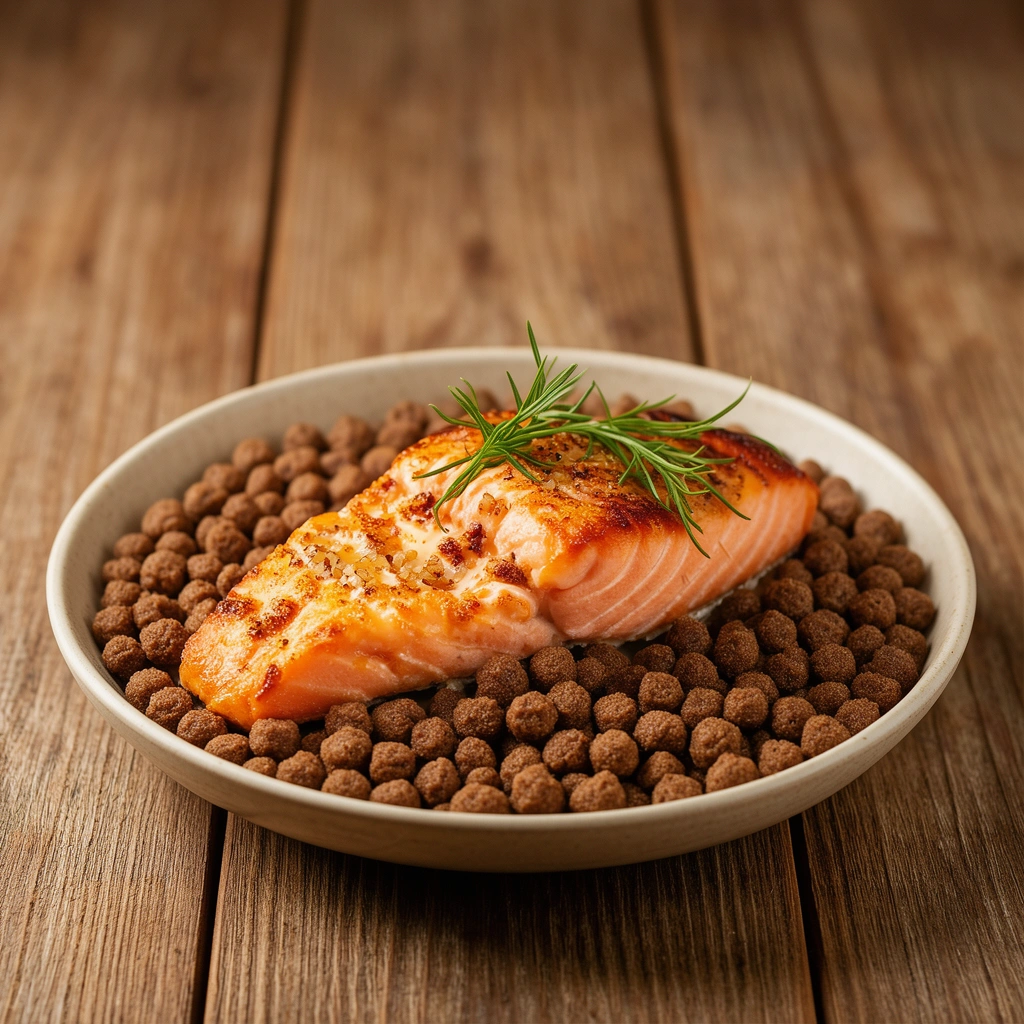
When it comes to feeding our dogs, we want nothing but the best. I’ve spent years researching and tasting various dog foods to find what truly benefits our furry friends. Today, I’m excited to share everything you need to know about salmon dog food, one of the most nutritious options on the market. You can trust that this guide will cover all the key details to help you make an informed choice.
So, what exactly is salmon dog food, and why should you consider it for your pet? Salmon dog food is a type of dog food where salmon is the primary protein source. It’s rich in omega-3 fatty acids, high-quality protein, and essential vitamins, making it excellent for your dog’s skin, coat, joints, and overall health. Salmon dog food is especially suitable for dogs with allergies or sensitivities to other proteins.
In the sections ahead, I’ll dive deep into salmon dog food’s benefits, how to choose the best product, homemade recipes, and important safety tips. Let’s get started on ensuring your dog enjoys a healthy, happy life fueled by salmon nutrition.
What Is Salmon Dog Food and Why Is It Popular?
Salmon dog food is formulated using real salmon, either fresh, frozen, or as salmon meal, as the main ingredient. Dog foods with salmon have gained popularity because salmon is a lean, digestible protein source packed with omega-3 fatty acids such as EPA and DHA. These fatty acids support brain function, reduce inflammation, and promote a shiny, healthy coat.
Unlike common proteins like chicken or beef, salmon is less likely to trigger food allergies, making it a great alternative for dogs with sensitive stomachs or skin issues. Salmon dog food also tends to contain fewer fillers, focusing on wholesome ingredients that pack nutritional value.
When looking for salmon dog food, you’ll typically find it in dry kibble, canned wet food, or freeze-dried forms. The quality varies widely, so checking ingredient lists for real salmon, minimal additives, and balanced nutrients is key. This versatility means salmon dog food can fit into many dog diets and lifestyles.
Next, I’ll explain exactly how salmon benefits your dog’s health and why it might be the best protein choice for your pet.
Health Benefits of Salmon Dog Food
Feeding your dog salmon dog food offers numerous health perks beyond basic nutrition. Here’s a quick breakdown of the main benefits:
- Omega-3 Fatty Acids: These essential fats help reduce inflammation, support heart health, and improve cognitive function.
- High-Quality Protein: Salmon provides all essential amino acids necessary for muscle repair and energy.
- Skin and Coat Health: The omega-3s and vitamin A in salmon reduce dryness and itchiness, resulting in a glossy coat.
- Joint Support: EPA and DHA have anti-inflammatory properties that can ease arthritis symptoms.
- Allergy-Friendly: Salmon is less likely to cause allergic reactions compared to common proteins like beef or chicken.
- Rich in Vitamins and Minerals: Salmon delivers B vitamins, selenium, potassium, and magnesium, all vital for metabolism and immune function.
Including salmon in your dog’s diet can improve vitality, decrease shedding, and support long-term health. When combined with wholesome carbs and vegetables, salmon dog food becomes a complete and balanced meal.
Coming up next is how to select the best salmon dog food brand and product that meets your dog’s needs and your budget.
How to Choose the Best Salmon Dog Food
Selecting the right salmon dog food involves looking beyond just the label. Here’s a quick guide to ensure you pick a high-quality product:
- Check the Ingredient List: Real salmon or salmon meal should be the first ingredient. Avoid foods with vague terms like “fish meal” without specifying the fish source.
- Look for Limited Fillers: Minimize grains, corn, soy, and artificial preservatives. Whole grains like brown rice or oats are preferable.
- Balanced Nutrients: Ensure the food meets AAFCO standards for complete and balanced nutrition.
- Avoid Artificial Additives: No artificial colors, flavors, or preservatives.
- Consider Your Dog’s Specific Needs: Puppies, seniors, or dogs with allergies may require specialized formulas.
- Brand Reputation: Choose brands with transparent sourcing and good manufacturing practices.
If you want to go a step further, consider rotating salmon dog food with other protein sources to provide dietary variety and prevent food sensitivities.
Next, I’ll share some practical homemade salmon dog food recipes you can try for your pup.
Homemade Salmon Dog Food Recipes for Your Dog
Making salmon dog food at home allows you to control the ingredients and ensure freshness. Here are two easy recipes you can prepare:
1. Simple Salmon and Sweet Potato Bowl
This recipe is rich in omega-3s and fiber, perfect for digestion and skin health.
Ingredients:
- 1 cup cooked salmon (boneless, skin removed)
- 1 cup cooked sweet potato (mashed)
- ½ cup steamed green beans
- 1 tablespoon olive oil
Instructions:
- Cook salmon thoroughly and flake into small pieces.
- Mash the cooked sweet potato.
- Steam green beans until tender.
- Mix all ingredients with olive oil.
- Serve at room temperature.
Tip: Always ensure salmon is fully cooked to avoid parasites.
2. Salmon and Quinoa Power Mix
Quinoa adds protein and complex carbs, great for active dogs.
Ingredients:
- 1 cup cooked salmon
- ½ cup cooked quinoa
- ½ cup cooked carrots (chopped)
- 1 teaspoon fish oil supplement (optional)
Instructions:
- Combine all ingredients in a bowl.
- Mix thoroughly.
- Serve fresh or refrigerate for up to 3 days.
Tip: Introduce new foods gradually to avoid digestive upset.
These recipes can be tailored to your dog’s size and preferences. Homemade salmon dog food allows you to avoid fillers and additives found in some commercial foods.
Next, let’s discuss potential risks and safety tips when feeding your dog salmon.
Safety Tips and Risks When Feeding Salmon to Dogs
While salmon dog food is generally safe and healthy, there are some precautions you should keep in mind:
- Avoid Raw Salmon: Raw salmon can contain parasites like Neorickettsia helminthoeca (salmon poisoning disease), which is fatal if untreated. Always cook salmon thoroughly.
- Watch for Allergies: Though rare, some dogs can be allergic to fish proteins. Monitor for itching, vomiting, or diarrhea.
- Limit Mercury Exposure: Salmon tends to have lower mercury levels than larger fish, but feeding in moderation is key.
- Balance the Diet: Salmon alone isn’t a complete diet. Ensure your dog’s meals are balanced with vitamins, minerals, and carbs.
- Beware of Bones: Always remove all bones to prevent choking or intestinal damage.
If you’re unsure about switching to salmon dog food, consult your veterinarian for personalized advice.
Next, I’ll cover some top-rated commercial salmon dog food brands you can consider.
Top Commercial Salmon Dog Food Brands to Consider
Choosing a trusted brand ensures your dog receives quality salmon dog food with reliable sourcing and production standards. Here are some well-regarded options:
- Blue Buffalo Wilderness Salmon Recipe: Grain-free, high in protein, with added vitamins and minerals.
- Wellness CORE Grain-Free Salmon: Rich in omega fatty acids, no fillers or artificial ingredients.
- Canidae PURE Limited Ingredient Salmon: Great for sensitive dogs, with simple, whole-food ingredients.
- Natural Balance L.I.D. Salmon & Sweet Potato: Limited ingredient diet, ideal for allergy-prone pups.
- Merrick Grain-Free Salmon & Sweet Potato: Made with deboned salmon and antioxidant-rich fruits and veggies.
Always check packaging for ingredient updates and confirm the product fits your dog’s dietary needs.
Next, I’ll explain how to transition your dog to salmon dog food safely.
How to Transition Your Dog to Salmon Dog Food
Switching your dog’s diet to salmon dog food should be gradual to avoid stomach upset:
- Start Slow: Mix 25% salmon dog food with 75% current food for 3 days.
- Increase Gradually: Move to 50% salmon food for the next 3 days.
- 75% and Beyond: Progress to 75% salmon dog food for 3 days.
- Full Transition: After 10-12 days, your dog should be fully switched.
Watch for any signs of digestive distress or allergies during this process. If issues arise, slow the transition or consult your vet.
Understanding Salmon Dog Food Labels: What to Look For
Reading labels can be overwhelming, but here are key terms and what they mean:
- Salmon (Fresh or Frozen): Whole fish as a primary ingredient.
- Salmon Meal: Dehydrated salmon used for concentrated protein.
- Grain-Free: No grains like wheat or corn; good for dogs with grain allergies.
- Limited Ingredient Diet: Simplified formulas to reduce allergy triggers.
- AAFCO Statement: Confirms the food meets nutritional standards.
- Omega Fatty Acids: Look for added salmon oil or fish oil supplements.
By understanding these terms, you can pick a product that truly benefits your dog.
The Environmental Impact of Salmon Dog Food
Sustainability is becoming a priority for many pet owners. Wild-caught vs. farmed salmon can have different environmental footprints:
- Wild-Caught Salmon: Generally lower environmental impact but may be more expensive.
- Farmed Salmon: More affordable but can raise concerns about pollution and antibiotics.
Look for brands that use responsibly sourced salmon certified by organizations like the Marine Stewardship Council (MSC). This ensures your dog’s food is both nutritious and eco-friendly.
Frequently Asked Questions About Salmon Dog Food
Q: Can puppies eat salmon dog food?
A: Yes, as long as the food is formulated for puppies and meets their nutritional needs.
Q: How often should I feed my dog salmon dog food?
A: It depends on your dog’s size and health. Many owners feed it daily or rotate it with other proteins.
Q: Is salmon dog food good for dogs with allergies?
A: Often yes, since salmon is a novel protein for many dogs, reducing allergy risks.
Q: Can I feed my dog raw salmon?
A: No, raw salmon can carry harmful parasites. Always cook it thoroughly.
Conclusion: Why Salmon Dog Food Is a Smart Choice for Your Dog
Salmon dog food offers a powerhouse of nutrients that support your dog’s skin, coat, joints, and overall vitality. Its allergy-friendly nature and rich omega-3 content make it an excellent protein option. Whether you choose commercial brands or homemade recipes, incorporating salmon into your dog’s diet can lead to noticeable health improvements.
Remember to select high-quality products, transition slowly, and always ensure salmon is cooked safely. Your dog deserves the best, and salmon dog food can be a tasty, nutritious way to show it.
Feeding your dog salmon dog food is a great way to boost their health and happiness. With the right knowledge and care, you’ll see the benefits in your dog’s energy, coat shine, and overall wellbeing. Give salmon dog food a try—you and your pup will be glad you did.